CHAPTER ONE
INTRODUCTION
1.1 Background to the Study
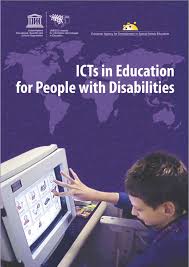
The capability of assistive technology in education classes for students with special needs is enormous. Some of the advantages of using technology include promoting academic success for students with disabilities in the field of writing, mathematics, spelling, reading and+ comprehension, enhancing their organizing capability and most importantly encouraging their social inclusion in society (Quenneville, 2015). Support or assistive technology offers many advantages by assisting writing for students with disabilities who usually find writing to be cumbersome (MacArthur, 2006). Once students overcome writing issues, they tend to be more successful within the general education environment. Also most of the learners with disabilities find it challenging to retain information from the standard syllabus. Many teachers face difficulty adapting curriculum as per the learning requirements of children with certain disabilities like learning disabilities and intellectual disabilities without any external assistance. Hence, it has become all the more important to focus on this issue to help teachers incorporate technology within the classroom to promote learning of learners with educational rehabilitation (Wilson & Cleland., 2011).
The Office of Special Education Programs (2011) recommends the usage of commonly available technology for children with disabilities that need rehabilitation to be included within the classroom. Also, the No Child Left behind Act of 2001 (NCLB, 2002) has acted as a catalyst in improving school facilities to meet the needs of the children with disabilities that needs rehabilitation. Even though most of the schools have responded positively to implement the required changes, some of the educational institutes do not have the right direction regarding the correct measures to be taken on students that need education rehabilitation. They are confused regarding the key elements that can result in effective organized change and the manner in which the teachers can be supported to assist learning of students with disabilities (Reed, Clifford & Svedkauskaite, 2004). Most of them have implemented assistive technologies for students with disabilities to create a well-defined approach towards change that can benefit all categories of students, even that group of children acknowledged by the NCLB Act. Use of assistive technology to aid learning of children with disability is, thus, gaining prominence with the widespread usage and easy availability of technology. Hence, looking to the importance of this subject, it will act as an informative source for educational providers to guide them further in their endeavor to aid learning of children with disabilities.
ICT (information and communications technology) is an umbrella term that includes any communication or application which encompassing radio, television, cellular phones, satellite systems, computer and network hardware or software and so on (www.searchcio-midmarket.techtarget.com/sDefinition/). From the computing dictionary, ICT is the study of technology used to handle information and aid communication (www.dictionary.refrence.com.). Nowadays, ICT is rapidly develop in many of countries which due to the globalization and technological change. Recently, ICT is widely use in many areas or sectors such as education, economy, politics and social. Especially for education, many countries now regard understanding ICT as part of the core of education, alongside writing, reading and numeracy. The emergence of ICT has made an improvement on the education for every student with learning disabilities as it brings a lot of advantages for every student with learning disabilities. For many teacher, ICT also had improved their effectiveness on the teaching process which in turn could help the student with learning disabilities to enhance their educational performance. That goes without saying that ICT has gradually become a part of the life for every student with learning disabilities and teacher. Thus, how can we imagine that without the help of ICT on education? In recent years, the computers and internet have shown their effectiveness and efficiency in education. Besides, ICT has also improved the learning environment of student with learning disabilities. For ICT, if we used appropriately, it could help to expand the access to education for student with learning disabilities and raise the quality of education by reinforcing the relevance of education. E-learning, blended learning and distance learning are the various types of learning that arise from the ICT.
Teachers of students with disabilities are facing serious instructional challenges as the diversity of students within each rehabilitation centre continues to widen. Students with such academic range with different labels as gifted, fast, average, slow and below average learners all face their teachers daily with full hope that their needs will be met. Teachers with their efforts often need to carry several chats, equipment specimen and others in order to teach a single topic effectively. However, these materials are often either unavailable or inaccessible; moreover, teachers do not have enough time between classes to procure and test these materials. Hence, most rehabilitation classes are limited to uninspiring and sometimes incomprehensive verbal lectures.
The fact remain that the method of teaching in rehabilitation centre which have been investigated and found effective have not produced desired effect on students academic performance in school. The teacher are still attached to the traditional method of chalk and talk, the practice which makes them longer behind contemporary demand for improved learning system curriculum. The perceived benefits of using ICT in schools include making teaching. Leaning interesting helping in the distance learning programme, help teachers to be up-to date, enhancing quality of work by both teachers and students. Human capacity development through ICT facilities in secondary schools is in short fall. This hampers the performance of students with disabilities in rehabilitation centre. On this, the researcher is bothered on the accessibility and utilization of ICT on educational achievement of students with rehabilitation.
1.2 Statement of the Problem
The persistent poor academic performance of the students with disabilities has been attributed by to approaches or methods of teaching. The Federal Ministry of Education (2007) advocated for a change in the strategies of imparting rehabilitation instruction to the students with learning disabilities by using ICT facilities like the Computer Assisted Instruction (CAI). The approach, according to UNESCO (2002), requires adjustment of the educational institutions to embrace new technology and appreciate computer technology as a learning tool to transform the present isolated, teacher-centred and textbook bound classroom into student-centered interactive knowledge environment. It is on the basis of this that this study intended to investigate the influence of ICT on the educational achievement of students with rehabilitation education in Federal College of Education (Special), Oyo.
1.3 Purpose of the Study
This study investigates the influence of ICT on educational achievement of students with rehabilitation education in Federal College Education (Special) Oyo. Specifically, the study intended to:
- investigate the level of accessibility of ICT in teaching students with rehabilitation education in Federal College of Education (Special), Oyo
- determines the level of utilization of ICT in teaching students with rehabilitation education in Federal College of Education (Special) Oyo
- shows the extent to which ICT improve the educational achievement of students with rehabilitation education in Federal College of Education (Special), Oyo.
1.4 Research Questions
The following research questions were raised to guide the study:
- What is the level of accessibility of ICT in teaching students with rehabilitation education in Federal College of Education (Special) Oyo?
- What is the level of utilization of ICT in teaching students with rehabilitation education in Federal College of Education (Special), Oyo?
- To what extent does ICT improve the educational achievement of students with rehabilitation of Education (Special) Oyo?
1.5 Significance of the Study
The findings of this study will benefit learning disabled students, teachers, curriculum developers as well as the ministry of Education and future researchers.
Students with disabilities will benefit from the findings of the study as the use of ICT to study and to rehabilitate will boost their performance and retention. It will also help them to develop more interest and skill in the use of computers which will facilitate the acquisition of knowledgeable skills such as sound societal values, norms and good attitude. The knowledge of their skill in computers will also help them to make proper career choice based on their capabilities on the use of computer assisted instructions.
The findings will help teachers in choosing an appropriate instructional material capable of releasing students’ tension towards the rehabilitation. It will motivate teachers to develop interest towards utilizing modern instructional materials as computer assisted instruction (CAI), and selecting suitable teaching methods that will be a possible means towards reducing failure in the teaching and learning in the school. It will equally help teachers to develop suitable methods for assessing students’ academic performance in the school. The findings will also sensitize lecturers of disabilities on the benefits of the use of computer as a strategy for lecturing and it will have greater effect on the academic performance and retention of the students. The research findings will as well form another dimension of innovations in the teaching and learning while rehabilitating students with learning disabilities.
Curriculum planners will also benefit from the study, since, the results of the study will assist in curriculum planning such as giving information relating to the teaching and learning in rehabilitation centre, computer can be utilized in appropriate strategies of curriculum planning, modification and revision.
Educational researchers and scholars will benefit from the findings of this study as it will provide them with academic literature on the effects of the different instructional techniques used in this study on students’ academic performance and retention of learning in rehabilitation centre.
1.6 Scope of the Study
The study focused on the influence of ICT on educational achievement of students with rehabilitation education in FCE (SP) Oyo. The scope covers Federal College of Education (Special), Oyo.
1.7 Definition of Terms
Computer: A computer is a device that accepts data (in the form of digitalized data) and manipulates it for some result based on a program or sequence of instructions on how the data is to be processed.
Rehabilitation: This means the process of correcting the disabilities in students.
ICT: This means Information and Communication Technology
Student: a person formally engaged in learning, especially one enrolled in a school or college. Also student can also be defined as any person who studies, investigates, or examines thoughtfully: a student of human nature.
Disabilities: This refers to some setbacks that face students. It may be physical or intellectual.
Assistive Technology: In this study, it means any object or system that increases or maintains the capabilities of people with disabilities.