A GUIDE FOR THE PARENT OF LEARNERS WITH HEARING IMPAIRMENT
Original price was: ₦800.00.₦400.00Current price is: ₦400.00.

Showing 1–16 of 41 results

Abstract
This seminar paper discussed accessibility and utilization of ICT on educational achievement of students with special needs. ICT, which is referred to technologies that provide access to information through communications is seen as important tools in the education of all students which students with special needs are inclusive. The seminar paper discussed extensively the concept of ICT, the concept of educational achievement, the purpose of using ICT or students with special needs and the impacts of ICT to students with special needs. Conclusively, the seminar paper recommend that government, parents, school management and teachers should make sure they adopt the use of ICT in educational programme.
Key Words: Information Communication and Technology, accessibility utilization, special needs

Introduction The capability of assistive technology in education classes for students with special needs is enormous. Some of the advantages of using technology include promoting academic success for students with disabilities in the field of writing, mathematics, spelling, reading and comprehension, enhancing their organizing capability and most importantly encouraging their social inclusion in society (Quenneville,…

TABLE OF CONTENT
Title page
Declaration i
Certification ii
Dedication iii
Acknowledgement iv
Abstract v – vi
Table of Content vii
CHAPTER ONE
INTRODUCTION
1.1 Background to the Study 1 – 7
1.2 Statement of the Problem 7 – 9
1.3 Purpose of the Study 9
1.4 Research Questions 10
1.5 Significance of the Study 10 – 11
1.7 Scope of the Study 12
1.8 Operational Definition of Terms 12 – 13
CHAPTER TWO
LITERATURE REVIEW
2.0 Introduction 14
2.1 Conceptual Review 14
2.1.1 Concepts of Artificial Intelligence 15 – 19
2.1.2 Concepts of Academic performance 19 – 22
2.1.3 Concepts of Physical and Health Impairment 22 – 23
2.2 Theoretical Review 24
2.2.1. Universal Design for Learning (UDL) Framework 24 – 26
2.2.2. Technological Pedagogical Content Knowledge (TPACK) Framework26 – 28
2.2.3. Constructivist Learning Theory 28 – 30
2.3 Empirical Review 30 – 34
2.4 Summary of Reviewed Literature 35 – 36
CHAPTER THREE
RESEARCH METHODOLOGY
3.0 Introduction 37
3.1 Research Design 37
3.2 Population of the Study 38
3.3 Sample and Sampling Techniques 38
3.4 Research Instrument 38-39
3.5 Validity of Research Instrument 39
3.6 Procedure for Data Collection 39
3.7 Method of Data Analysis 39
CHAPTER FOUR
PRESENTATION OF DATA AND DATA ANALYSIS
4.1 Introduction 40
4.2 Bio Data Distribution 40 – 42
4.3 Data Presentation 42 – 51
4.4 Discussion of findings 52 – 53
CHAPTER FIVE
SUMMARY, CONCLUSION AND RECOMMENDATION
5.1 Summary 54 – 55
5.2 Conclusion 55-56
5.3 Recommendations 56 – 57
5.4 Suggestions for Further Studies 57-58
References 59 – 62
Appendix 63 – 67
ABSTRACT
This study appraises the impact of Artificial Intelligence (AI) on the academic performance of learners with physical and health impairments at the Federal College of Education (Special), Oyo. Using a descriptive survey design, 120 students were sampled across three academic levels, and data were collected through a structured questionnaire. Analysis employed frequency counts, percentages, and chi-square tests. Findings revealed that specific AI technologies, such as speech-to-text tools, adaptive learning platforms, and assistive devices, are in active use (χ² = 130.54, p < 0.05), confirming their presence in the institution. Results further indicated that AI significantly enhances students’ academic performance and engagement (χ² = 33.00, p < 0.05). Nonetheless, notable challenges exist, including high costs, poor infrastructure, and limited accessibility, all of which were found to be statistically significant (χ² = 86.09, p < 0.05). Importantly, educators and support staff were shown to be aware, trained, and prepared to use AI tools effectively (χ² = 92.48, p < 0.05). The study concludes that AI integration has a strong positive effect on inclusive education by improving accessibility and learning outcomes for students with impairments. However, systemic barriers must be addressed through infrastructure investment, continuous staff development, and supportive policy frameworks. Recommendations highlight the need for institutional and national strategies to optimize AI’s role in advancing equity and academic success in special education.
Keywords: Artificial Intelligence, Academic Performance, AI technologies, Physical and Health Impairments.
Chapter One
Introduction
Physical and health impairments refer to a wide range of chronic or acute conditions that limit a person’s physical functioning, mobility, stamina, or ability to perform daily activities. These impairments can be congenital (present at birth) or acquired later in life through injury, illness, or degenerative conditions. Physical impairments often include conditions such as cerebral palsy, muscular dystrophy, spinal cord injuries, amputation, or severe orthopedic impairments (Berg, 2025). Health impairments may include chronic or acute health conditions like epilepsy, diabetes, asthma, heart disease, cancer, and immune system disorders. These conditions may not always be visibly apparent but can significantly impact an individual’s strength, alertness, and overall ability to engage in normal life activities, including education and employment. Educationally, students with physical and health impairments may require accommodations or specialized instruction to access learning environments effectively. For example, they might need assistive technology, adapted equipment, physical therapy, or individualized educational plans (IEPs). Schools are legally mandated, under laws like the Individuals with Disabilities Education Act (IDEA), to provide such support to ensure students have equal access to education. Beyond academics, social inclusion is a critical concern; children with impairments may face physical barriers or social stigmatization, necessitating awareness and inclusion efforts from educators, peers, and communities (National Institute of Environmental Health Science, 2025).
Academic performance refers to the level of achievement a student reaches in their educational pursuits, often measured through grades, standardized tests, class participation, and the successful completion of assignments and exams. It serves as an indicator of how well a student understands and applies knowledge in various subjects such as mathematics, science, language, and social studies. Good academic performance is typically associated with discipline, consistent study habits, time management, and effective learning strategies, while poor performance may result from a range of factors including lack of motivation, learning difficulties, or external pressures. Several factors influence academic performance (Oti, Olusola, Alvan, Areh, 2023). These include personal attributes such as intelligence, motivation, and emotional well-being, as well as environmental conditions like family support, school quality, peer influence, and availability of learning resources. Socioeconomic status can also play a major role, as students from disadvantaged backgrounds often face more challenges in accessing quality education and support services. Additionally, health issues, including mental health concerns, can significantly affect concentration, energy levels, and overall engagement with learning (Yan and Gai, 2022).
Learners with physical and health impairments often face unique challenges that can significantly affect their academic performance. These challenges may arise from limitations in mobility, endurance, or medical needs that interfere with consistent school attendance and classroom participation. For instance, students with chronic illnesses such as epilepsy or diabetes may experience frequent hospitalizations or fatigue, making it difficult to keep pace with the curriculum. Similarly, learners with physical disabilities may face barriers in accessing learning environments or educational materials, especially if appropriate accommodations are not in place. Despite these challenges, many students with physical and health impairments are capable of achieving high academic standards when given the right support. The presence of inclusive educational practices, such as individualized education programs (IEPs), modified classroom instruction, assistive technologies, and accessible learning environments, can greatly enhance their learning outcomes. Teachers’ attitudes, awareness, and training in special needs education also play a pivotal role. When educators understand the nature of these impairments and adopt flexible teaching strategies, they create a more equitable platform for all learners to thrive academically (Bhuwan, 2019).
Moreover, emotional well-being and peer relationships can influence the academic performance of these students. Social isolation, stigma, or lack of peer support may reduce their confidence and motivation to engage fully in academic tasks. On the other hand, a nurturing school environment that promotes inclusion and empathy can improve both their academic engagement and overall quality of life. Schools that promote collaboration between general educators, special educators, medical professionals, and families tend to be more successful in supporting learners with impairments. Academic performance for these learners should not be judged solely through traditional assessments. Many students with impairments may demonstrate their understanding in non-conventional ways, and their progress may be better reflected through individualized benchmarks rather than standardized test scores. Therefore, a shift toward more comprehensive and adaptive evaluation methods is essential to accurately capture their learning achievements and potential (Liu, 2023).
Artificial Intelligence (AI) refers to the development of computer systems that can perform tasks typically requiring human intelligence. These tasks include learning, problem-solving, understanding natural language, recognizing patterns, and making decisions. At its core, AI seeks to simulate human cognitive functions, often through algorithms that enable machines to analyze data, learn from it, and make informed choices without constant human intervention. The field of AI encompasses several subfields, including machine learning, neural networks, natural language processing, robotics, and computer vision. Over the past few decades, AI has evolved from theoretical concepts to practical applications that permeate everyday life. From voice-activated assistants like Siri and Alexa to recommendation algorithms on Netflix and Amazon, AI technologies are becoming increasingly integrated into consumer services. In more advanced fields, AI powers medical diagnostic tools, autonomous vehicles, financial trading systems, and even legal and educational software. These applications demonstrate AI’s potential to increase efficiency, accuracy, and convenience across various sectors (Cole and Eda, 2025).
Despite its benefits, AI also raises important ethical and societal concerns. Issues such as job displacement due to automation, algorithmic bias, data privacy, and the potential misuse of AI in surveillance or weaponry require careful consideration. There is a growing need for regulations and ethical frameworks to ensure that AI technologies are developed and deployed responsibly. Transparent algorithms, accountability in decision-making, and human oversight are critical components of trustworthy AI systems. Looking ahead, the future of AI holds vast promise but also uncertainty. As AI systems become more sophisticated, questions about machine consciousness, human-AI collaboration, and the limits of automation are increasingly relevant. Ensuring that AI is used to augment human potential rather than replace it is a central challenge for policymakers, developers, and society as a whole. With ongoing research and interdisciplinary collaboration, AI has the potential to transform how we live, work, and think provided it is guided by ethical principles and human-centered design (Olabiyi, 2024).
Artificial Intelligence (AI) is gradually becoming a transformative force in education, particularly in enhancing the academic experience of learners with physical and health impairments. In Nigeria, where access to inclusive and specialized educational services is often limited, AI offers promising solutions to bridge the gap. For students with disabilities such as mobility challenges, visual or hearing impairments, and chronic health conditions AI-powered tools can provide tailored educational content, real-time assistance, and personalized learning pathways that adapt to their unique needs and learning pace. One of the most significant contributions of AI in this context is its ability to facilitate inclusive learning through assistive technologies. Speech-to-text software, AI-driven reading assistants, and intelligent tutoring systems help overcome barriers in communication and comprehension. These technologies enable learners who may struggle with traditional classroom participation to engage more fully and independently. In Nigeria, where a shortage of trained special education teachers persists, AI can act as a supplemental resource, supporting students in both mainstream and special schools (Onwuegbuzie, 2025).
Moreover, AI has the potential to monitor student progress and provide data-driven insights for educators and caregivers. For learners with chronic illnesses who may have inconsistent school attendance, AI tools can track learning patterns and offer remote access to lessons, ensuring continuity in education. This is especially vital in rural or underserved regions of Nigeria, where healthcare and educational infrastructure are often inadequate. AI-powered e-learning platforms and mobile applications can reduce geographic and logistical barriers that learners with impairments frequently encounter. However, the integration of AI in Nigeria’s education system faces several obstacles. These include inadequate infrastructure, poor internet connectivity, limited digital literacy among educators, and high costs of AI technologies. Additionally, there is a pressing need for local development of AI tools that consider cultural and linguistic diversity, as many global solutions may not align with the realities of Nigerian learners. Addressing these challenges requires investment in ICT infrastructure, teacher training, and government policies that promote inclusive and technology-driven education (Wei. Et. al, 2025).
1.2 Statement of the Problem
Learners with physical and health impairments often face significant barriers to academic success due to limitations in mobility, communication, endurance, and frequent disruptions to their schooling caused by medical conditions. Traditional educational systems, particularly in developing countries, are frequently ill-equipped to provide the individualized support and adaptive learning environments these students require. As a result, their academic performance tends to lag behind that of their peers, not necessarily due to a lack of intellectual ability, but because of systemic challenges and inaccessible learning structures. In recent years, Artificial Intelligence (AI) has emerged as a promising tool to address these educational inequalities by offering personalized learning solutions, intelligent assistive technologies, and flexible virtual learning environments. AI has the potential to transform the educational experience of students with physical and health impairments by enhancing accessibility, promoting inclusion, and enabling continuous learning regardless of physical limitations or health interruptions. However, despite its theoretical potential, there is a lack of comprehensive understanding regarding the actual impact of AI on the academic performance of these learners, especially within resource-constrained educational contexts.
Furthermore, many schools and policymakers face challenges in adopting AI tools due to infrastructural deficits, lack of digital literacy among educators, inadequate training, and insufficient data on what AI interventions are most effective for this population. Without empirical evidence and a clear understanding of how AI is being used and its measurable impact on academic outcomes, educational stakeholders may either underutilize or ineffectively implement these technologies. Thus, there is a pressing need to appraise the extent to which AI is influencing the academic performance of learners with physical and health impairments, identifying both its strengths and the contextual barriers that limit its effectiveness. This study therefore seeks to critically examine the role of AI in supporting the academic progress of students with physical and health impairments. It aims to uncover whether AI-driven educational tools are making a meaningful difference, explore the challenges surrounding their implementation, and provide recommendations for optimizing their use in inclusive education systems.
1.3 Purpose of the Study
The general purpose of this study is to appraise the impact of Artificial Intelligence (AI) on the academic performance of learners with physical and health impairments at the Federal College of Education (Special), Oyo. Specifically, the purpose of this study include:
iii. To identify the challenges and limitations associated with the implementation and usage of AI technologies in special education at the institution.
iii. What challenges and limitations are associated with the implementation and use of AI technologies in special education at the institution?
Pay for the complete project
Project pages: 76
Do you have a new topic to conduct research on? Contact +2348039692804 for getting it done without delay

TITLE: AN ASSESSMENT INTO FISH REARING AS A MEANS OF POVERTY ALLEVIATION AMONG LEARNERS WITH HEARING IMPAIRMENT IN AFIJIO LOCAL GOVERNMENT AREA, OYO STATE
CATEGORY: Educational Research Project | Discipline: Special Education & Agricultural Science
Location Focus: Afijio Local Government Area, Oyo State, Nigeria
Format: Microsoft Word (.docx) | Pages: 84 | Word Count: ~15,000
PRODUCT DESCRIPTION
Unlock a unique and impactful research study exploring how fish rearing (aquaculture) can serve as a sustainable tool for poverty alleviation and empowerment among learners with hearing impairment. This original academic project provides a data-driven assessment of how inclusive agricultural practices, specifically fish farming can foster financial independence, vocational skills, and social inclusion for individuals with disabilities.
This project is ideal for students, educators, researchers, and policymakers interested in inclusive education, disability studies, rural development, and agricultural entrepreneurship.
WHAT’S INSIDE
Employs a descriptive survey design with 120 respondents from the Federal College of Education (Special), Oyo.
Covers key theories including the Sustainable Livelihoods Framework, Social Model of Disability, and Human Capital Theory, linking disability inclusion with sustainable agriculture.
Reveals that fish farming is not only viable but also a profitable and inclusive livelihood option for learners with hearing impairment.
Advocates for inclusive training programmes, government funding schemes, and disability-friendly agricultural policies to promote empowerment and social equity.
Includes structured questionnaires, analyzed responses, and clear statistical results using simple percentages for easy comprehension.
KEY BENEFITS
FILE DETAILS
PERFECT FOR
Get this complete project today and discover how inclusive fish rearing can change lives, one pond at a time.
Keywords: Fish Rearing, Poverty Alleviation, Hearing Impairment, Vocational Training, Inclusive Education, Disability Empowerment, Sustainable Livelihoods, Oyo State, Nigeria

Product Title:
An Assessment of Entrepreneurship Skills Needed by Business Education Students in Federal College of Education (Special), Oyo
Product Description:
This academic project offers an insightful evaluation of the entrepreneurial skills essential for Business Education students at the Federal College of Education (Special), Oyo. Grounded in Human Capital Theory, Innovative Diffusion Theory, and Self-Efficacy Theory, the study investigates how effectively current educational programs prepare students for real-world entrepreneurial challenges.
Through a descriptive survey of 60 students, the research identifies key strengths such as problem-solving, financial literacy, adaptability, and communication, while highlighting gaps in creativity, innovation, and digital literacy. It explores the challenges educators face in assessing entrepreneurial skills and calls for an updated curriculum that emphasizes digital competencies, experiential learning, and innovation-driven education.
This work is a valuable reference for educators, policymakers, and researchers in business education, entrepreneurship development, and curriculum design, providing evidence-based recommendations for strengthening employability and entrepreneurial readiness in Nigerian higher institutions.
Key Highlights:
Keywords:
Entrepreneurship Skills, Business Education, Financial Literacy, Adaptability, Communication, Curriculum Development, Innovation, Employability
Pages:
86 pages

Project Title:
Assessing the Impact of Adaptive Learning Tools on Academic Performance of Learners with Learning Disabilities in Business Education
Project Pages
84 Pages
Project Overview
This research project investigates how adaptive learning technologies influence the academic performance of students with learning disabilities in Business Education. It provides a data-driven evaluation of how tools powered by artificial intelligence (AI) and data analytics personalize learning experiences, enhance engagement, and foster inclusivity in educational environments.
Conducted at the Federal College of Education (Special), Oyo, the study draws insights from 60 students with learning disabilities, using a descriptive research design and a structured questionnaire. Through rigorous analysis, it reveals that adaptive learning tools—such as interactive simulations, adaptive quizzes, and multimedia-based platforms—significantly improve comprehension, motivation, and retention of business concepts compared to traditional teaching methods.
Key Findings
Project Significance
This research contributes to the field of inclusive education by demonstrating how adaptive technologies can transform Business Education into a more personalized, effective, and equitable experience. The findings offer valuable insights for educators, policymakers, and technology developers on integrating adaptive learning systems to support students with diverse learning needs.
Recommendations
The project advocates for:
Keywords:
Adaptive Learning Tools, Learning Disabilities, Business Education, Inclusive Learning, Academic Performance, Artificial Intelligence, Personalized Learning

CHAPTER ONE INTRODUCTION Background to the Study A curriculum is a set of courses, course work and topics, offered in schools. A curriculum in simple terms is the aggregate of subjects/courses and topics that are being or should be offered in schools (Arthur, 2017). Since when Nigeria got independence, teachers have contributed immensely to the…

Raheem (2018) notes that education must be considered as a key investment in modern economies because, as previously seen within the framework of a knowledge-based economy, there are strong and positive correlation between economic activity and education in explaining economic growth. He noted that parents should make sure they put all positive machinery that will assist the academic performance of their children so that they can secure a better future for them economically

This research sought to investigate counselling and study group as means of improving the performance of junior secondary school students in integrated science in Oyo West Local Government, Oyo State. The objectives of the study are to ascertain available counselling services and determine problems associated with counselling services for Junior Secondary Schools. Also, to determine the extent to which counselling services and study group affect academic performance of Junior Secondary School students in Integrated Science in Oyo West Local Government, Oyo?
ABSTRACT
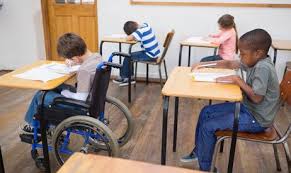
This study examined the “Educational barriers and coping strategies of physically challenged students of secondary school education in some selected secondary schools in Afijio Local Government area of Oyo State” in order to achieve this, 180 students were randomly sampled as respondents. The findings therefore recommends that the research on educational barriers and coping strategies of physically challenged students in secondary school should be adopted by stakeholders in the field of education. This will help in encouraging physically challenged students to go to school more. Also, federal government should support all students who are physically impaired by providing them free bus to school. Also, the Federal meal that government are providing for public school students should be given more attention so that the meal can circulate all the schools in Nigeria.
Abstract
Persons with disabilities are often left out of development processes and development progress. United Nations Development Programme (UNDP) is committed to an inclusive approach to sustainable human development which benefits all and ensures that no one is left behind. UNDP has a strong and institutional commitment to mainstream human rights including the rights of persons with disabilities in our work, through the human rights-based approach to our development programming. The inclusion of persons with disabilities in our work is also instrumental to the achievement of human development and the SDGs.

CHAPTER ONE INTRODUCTION Background to the Study In every organization setup, there is a need for effective management. That is when there can be a productive effort. Classroom behaviour is one of the most complicated issues teachers face today because classrooms are much more complicated than they were in the previous years, more pupils come…

CHAPTER ONE
INTRODUCTION
1.0 Background to the Study
Mathematics is one of the world known subjects taught from elementary to higher institution. The history of the subject is traced to Greek word (máthēma) which means “knowledge, study, learning. It includes the study of such topics as quantity, structure, space, and change. Mathematicians seek and use patterns to formulate new conjectures; they resolve the truth or falsity of conjectures by mathematical proof (Wikipedia, 2018). When Mathematical structures are good models of real phenomena, then mathematical reasoning can provide insight or predictions about nature. Through the use of abstraction and logic, Mathematics developed from counting, calculation, measurement, and the systematic study of the shapes and motions of physical objects. Practical Mathematics has been a human activity from as far back as written records exist. The research required to solve mathematical problems can take years or even centuries of sustained inquiry.
Uchechi (2013) asserts that rigorous arguments first appeared in Greek mathematics, most notably in Euclid‘s Elements. Since the pioneering work of Giuseppe Peano (1858–1932), David Hilbert (1862–1943), and others on axiomatic systems in the late 19th century, it has become customary to view mathematical research as establishing truth by rigorous deduction from appropriately chosen axioms and definitions. Mathematics developed at a relatively slow pace until the Renaissance, when mathematical innovations interacting with new scientific discoveries led to a rapid increase in the rate of mathematical discovery that has continued to the present day. Mathematics is essential in many fields, including natural science, engineering, medicine, finance, and the social sciences. Applied mathematics has led to entirely new mathematical disciplines, such as statistics and game theory. Mathematicians engage in pure Mathematics (Mathematics for its own sake) without having any application in mind, but practical applications for what began as pure mathematics are often discovered later.
Teaching in today’s mixed-ability classroom can be a challenge. These days, it is not uncommon to find a wide range of abilities in the one classroom—from students struggling to grasp new concepts, to those who are way ahead of their peers from day one. Teaching Mathematics is also a world-wide activities. It ha ts own clallenges just like other subjects. Ali and Jabeen (2017) state that problems of teaching mathematics have created a range of problems for early math learners, including a large achievement gap between students. On this Ali and Jabeen (2017) add that while individual students do benefit from different learning styles, there are a range of effective strategies which can help all students to succeed in mathematics. Ali and Jabeen (2017) suggested seven effective strategies for teaching elementary Mathematics. The strategies are;
Make it hands-on: Elementary math can be difficult because it involves learning new, abstract concepts that can be tricky for children to visualize. Try to imagine what it is like for a five-year-old to see an addition problem for the very first time. Since it is a totally new concept to them, it can be hard for them to visualize a scenario where one quantity is added to another. Manipulatives are hands-on tools that make math a lot easier for young children to understand. Tools like Lego, clay, and wooden blocks can all be used in the classroom to demonstrate how math ideas work.
Use visuals and images: While students will come across countless graphs and visuals in their math textbooks, research shows this isn’t the only place they should be utilized. The most powerful way to use graphics in elementary math is in conjunction with specific practice or guidance, either from a teacher or another classroom tool such as Mathseeds.
One of the methods used in teaching mathematics is advance organizer. Crowell (2018) states that advance organizer is a tool used to introduce the lesson topic and illustrate the relationship between what the students are about to learn and the information they have already learned. They are used during expository instruction, which is the use of an expert to present information in a way that makes it easy for students to make connections from one concept to the next. By using an advance organizer to link the new information to old information, the new information can be remembered more easily. Crowell (2018) further states that there are three basic purposes of advance organizers. First, they direct students’ attention to what is important in the upcoming lesson. Second, they highlight relationships among ideas that will be presented. Third, they remind students of relevant information that they already have.
Uchechi (2013) states that Mastery learning instructional approach is based on behavioural learning theory. Behaviourists believe that learning is influenced by the experiences that learners are exposed to within the environment. Taoheed, Ali and Jabeen (2017) add that mastery learning strategy is a teaching strategy that works on the principal of ”take your time”. lt allows multiple opportunities to demonstrate mastery of the content taught. It involves breaking down and then sequential organization of learning material into small units with predetermined objective. The learner passed through each unit in organized fashion. Every student is allowed the required time to master a given piece of task before moving to the next unit. At the end of each unit student pass though formative assessment followed by feedback and corrective assignments. Students must demonstrate mastery on unit tests before moving on to next. Feedback point out learning difficulties and “corrective assignment “correct these difficulties of learners.
Taoheed, Ali and Jabeen (2017) further add that mastery learning Strategy works in psychological order of learning. Learner proceeds from easy to difficult. According to Bloom’s taxonomy of behavioral objectives learner proceeds from lower to higher order of cognitive domain, i.e. from knowledge to comprehension and so on. If lower order of cognitive domain is not mastered, this could deter a learner to proceed to the next higher order of cognitive domain. Therefore Bloom’s (1968) mastery learning stress on ensuring that all learners should have a better understanding of the concepts taught before moving to the next level. Yemi (2018) also states that the concept of mastery learning is rooted in ancient Greek philosophy but the prominent work on mastery learning is done by Johw B. Carroll and Benjamin Samuel Bloom. Carrol (1963) present theoretical model of mastery learning and Bloom (1968) convert it into the practical model of school learning. After Bloom’s (1968) mastery learning model, educationist and researcher start working on this concept. Most of the work has been done on cognitive and effective learning outcomes. Very few studies considered learning retention which is indispensible variable for transfer of new knowledge.
Researchers have presented different findings on the pupils’ attitudes of Mastery Learning Strategy. Adeyemo, Veronica and Babatunde (2014) submit that Mastery Learning Strategy used in teaching pupils stressed more of mastery of content, through corrective feedback and remediation rather cooperative skills but the results showed that Mastery Learning Strategy is superior to conventional teaching method in terms of achieving higher scores. Mastery Learning Approach allows students to have enough time to master the prerequisites before making progress. Poor academic performance in physics could also be attributed to many factors among which teacher’s strategy itself was considered as an important factor. Yemi (2018) affirms that Mastery Learning Strategy allows pupils to have enough time to master the prerequisites before making progress. Poor academic performance of pupils could also be attributed to many factors among which teacher’s strategy itself was considered as an important factor.
Omosewo (1993) in Adeyemo, Veronica and Babatunde (2014) implies that the mastery of physics concepts might not be fully achieved without laboratory work. The teaching of physics without laboratory work may certainly result in poor academic achievement. However, Arlin and Webster (1983) raised an important issue regarding the use of instructional time in Mastery Learning. He argued that low achievers in grouped |\/Iastery Learning do better because of corrective instruction, but faster students may be slowed down waiting for the other students.
Also, Wachanga and Gamba (2004), in their study on effects of using Mastery Learning Approach on secondary school students’ achievement in Chemistry found that Mastery Learning Approach facilitates students learning Chemistry better than the regular teaching method.
Patrcia, Wambugu and Jonhson (2015) found out that cooperative class experiment teaching method facilitated students’ mathematics learning. This method also increased student’ motivation to learn. The cooperative concept mapping approach teaching method enhanced the teaching of other school subjects in other levels of education. A research done in the teaching of mathematics by Kibett and Kathuri (2005) revealed that students who were taught using mastery learning out-performed their counterparts in regular teaching approach.
Amiruddin, Abd. Samad and Othman (2014) add that mastery learning has been studied widely, and the advantages are clear in terms of improved performance by the trainees.There are advantages of mastery learning in mathematics, which depend on various models and designs formulated to achieve mastery learning and the way they are delivered. The two variables shown to have influenced on practice include 1) the way in which the task is practiced, either as the whole task, practice of parts in a sequential order, or practice of parts in a random order, which is also known as contextual interference and 2) the way in which practice sessions are distributed, either as massed or regular teaching sessions, which is also known as distributed practice. The present study examined the effects of innovative mastery learning strategy on pupils achievement in Mathematics.
1.2 Statement of the problem
Teaching Mathematics in elementary schools is an herculean task for Mathematics teachers. This is because the pupils may not have some prerequisite knowledge of the subject taught. Also, the pupils in elementary classes may find it difficult to understand the concepts in Mathematics. This is one of the reasons why many students use to have deficiency in mathematics in their final examination. Also, the hatred of mathematics has been registered in the brain of many pupils from elementary classes. In fact, it is certain that if many of student’s opinion were sampled on cancelling mathematics, they will support the motion. Not that they do not realize that mathematics is an essential subject but because of its difficulties.
However, mathematic is believed to be interesting in elementary classes if mathematics teachers are innovative in finding ways of making the concepts clearer and easier for the students. On this, the researcher intends to carry out an investigation on the effects of innovative mastery learning strategy on pupils achievement in mathematics.
1.3 Research Questions
What is the Significant Difference between the achievement of pupils in Mathematics when taught with mastery learning strategy and with the conventional lecture method?
What difference exists between the mean scores of male and female pupils in Mathematics when taught using innovative mastery learning strategy and the conventional lecture method?
How do pupils of different interest levels differ in their achievement in Mathematics when taught with innovative mastery learning strategy and with the conventional lecture method?
1.4 Purpose of the study
The study sought to investigate effects of innovative mastery learning strategy on pupils’ achievement in mathematics. It also sought to determine the difference in the performance of students taught with innovative learning strategy and those taught with other strategies.
1.5 Significance of the Study
The main purpose of this study is to investigate the effects of innovative mastery learning strategy on pupils’ achievement in mathematics. The study is significant because it reveals the importance of innovative learning strategy in making mathematics subject easier to understand during teaching-learning process. The research work will also be useful for education planner in the school, the State government and Federal Government at large to know the effects of innovative learning strategy in teaching mathematics.
1.6 Scope and Limitation of the Study
The study is focused on elementary schools in Afijio Local Government area of Oyo State.
1.7 Operational Definition of Terms
Mathematics: This is a subject taught in all levels of education which primarily deals with numbers.
Innovative Mastery Learning: This is one of the recent methods in teaching mathematics to students with the intention of making the subject easier to learn.
Elementary: This is also known as primary school. It is the first stages of education which Nigerian government recognizes as Basic education.

CHAPTER ONE
INTRODUCTION
1.1 Background to the Study
In recent years the United Nation Organisation has introduced a number of policy papers aimed at transforming the children’s social care system (Wilkison and Bowyer, 2017). Much of this reform began in 2000 with the publication of Adoption: A new approach. More recently, major changes have been introduced through the Family Justice Review and the recent publication of Putting Children First. This came up as there is an apparent observations that buttress the fact that many children are suffering from parental neglect and societal negative behaviour.
In a recent post made by Child Family Community Australia (CFCA) (2019) on their website, it was explained that adolescent neglect refers to any behaviour by parents, caregivers, other adults or older adolescents that is outside the norms of conduct and entails a substantial risk of causing physical or emotional harm to an adolescent or young person. Such behaviours may be intentional or unintentional and can include acts of omission (i.e., neglect) and commission (i.e., abuse). The five main subtypes of adolescent abuse and neglect are physical abuse, emotional maltreatment, neglect, sexual abuse, and witnessing family violence. Child Family Community Australia (2019) further explained that adolescent neglect can lead to a wide range of adverse consequences for young people.
According to the World Health Organization; adolescent age is the period between ages 10 to 19 years, these period is associated with biological changes such as puberty, social and psychological changes associated with awareness of sexuality (Adeyemo and Ogunlowo, 2018). Neglect and physical abuse are common important modifiable psychosocial causes of comorbidity in adolescent living in Nigeria. This has been seen how human trafficking is common through the route of Okerete, Saki, and Oyo; where adolescents who are neglected by their parents are used to make money for other Nigerians (Adeyemo and Ogunlowo, 2018).
According to Centre for Disease Control and Prevention (2019), adolescent abuse and neglect result from the interaction of a number of individual, family, societal, and environmental factors. Adolescent abuse and neglect are not inevitable—safe, stable, and nurturing relationships and environments are key for prevention. Preventing adolescent abuse and neglect can also prevent other forms of violence, as various types of violence are interrelated and share many risk and protective factors, consequences, and effective prevention tactics. Using a public health approach, we can prevent child maltreatment before it starts.
Maxey and Beckert (2016) defines adolescent as a time of marked biological changes, cognitive adjustments, and social transitions. While not all youth experience these transformations equally, disproportionately more young people with disabilities are prone to challenges than their typically developing peers. As a result, this study intends to look into the effects of parental neglect and societal attitude on economic empowerment of adolescents.
The neglected adolescents are left to have no futures as they might have used all their golden periods to be wandering about or serving other members. They may suffer basic educational needs and the basic trio of human life; food shelter and clothing. In the north, the neglected adolescents are known to be Almajiris, in the south, they are known to be house helps while in the East, they are known to be runs girls (prostitutes). On this, the researcher intends to carry out a study on effects of parental neglect and societal attitude on economic empowerment of adolescents senior secondary school.
1.2 Statement of the Problem
The role of parents and society in the achievement of every child go a long way. This is because every child is the product of his society and the smallest unit of every society is the home. A child who lacks parental and societal care may not be useful in the society he belongs. When he grows to the stage of adolescent, he may lacks necessary guide from those who are where withal. An adolescent who is denied this societal guide, is tend to have a set-back in his life pursuit. If such adolescent now become a victim of neglected parents and negative social attitudes, the psychological effects will be too much and this is liable to affect his life success; his academic pursuit economic empowerment acquisition skills will be affected. On this, the researcher intends to carry out a study on the effects of parental neglect and societal attitude on economic empowerment of adolescents.
1.3 Purpose of the Study
The purpose of this study is to investigate the effects of parental neglect and societal attitude on empowerment of adolescents. Also, this study tends to find out the results of parental neglect and societal attitudes on economic empowering of adolescent. In nutshell, this study intends to investigate:
1.4 Significance of the Study
The study on the effects of parental neglect and societal attitude on economic empowerment of adolescents is significant on:
iii. Public and Private Individuals: The study will be of immense benefit to both the public and private individuals who are greatly convinced about the rate of increase in divorce in Nigeria as a whole.
1.5 Research Questions
1.6 Scope of the study
This research focuses on the effects of parental neglect and societal attitude on economics empowerment of adolescents. The study will be to Oyo Metropolis of Oyo State
1.7 Definition of Terms
Neglects: This means inattentiveness of parents to adolescents
Parents: In this study, it means the biological family of individuals adolescent Social Attitudes: This means the actions and reactions of the members of the society to individuals adolescent.
School: This is a building dedicated for teaching-learning process. The school contains different classes for different level of students.
Economic empowerment: This means the financial sustainability that the adolescent makes through an employment he creates for himself.

CHAPTER ONE
INTRODUCTION
Educational activities are geared towards ensuring that students achieve mastery of educational objectives. In school , the extent to which these objectives have been achieved is determined by their level of peer pressure, time management as students success are reflected in their academic performance.
Peers play a large role in the social and emotional development of students (Allen; 2005). It is natural that the influence of an early age increase through the peer group by imitating friend as they grow and mature. A Peer refers to someone that you learn from his/her behaviour with the intention of copying him/her in such behaviour. (Hardcastle, 2002).
Peer pressure also known as peer influence or peer group. This due to the similarity of the outcome. However, the term peer pressure is often used among psychologist to explain the influence on peers on a person. Hartney (2011) defined the term “pressure” as the process by which someone is reinforced to do something he/she might not otherwise choose to do. According to Hartney, (2011) it could be said that peer influence refers to the pressures that peers can have on each other. Peer influence is emotional or mental forces from people belonging to the same social group (such as age, grade or status) to act or behave in a manner similar to themselves. This shows that peer group has an embedment of press influence or pressure. Jones, (2010) defined peer group as the ability of people from the same social rank or age to influence another of same age bracket. Peer group is usually associated with teens although its influence is not confined to teenagers alone. Mature adults, teens, young adults and children can be seen doing things in order to be accepted by their peers. Peer group is commonly associated with episodes of adolescent risk taking (such as delinquency, drug abuse, sexual behaviours), because these behaviour commonly occur in the company of peers. Peer group can also have positive effects when youth are influenced by the peer toward positive behavior such as volunteering for charity or excelling in academics (Kellie, 2013).
However, peer group can also have a negative effect. They can encourage each other to indulge in many atrocities such as use drugs or alcohol, or become involve in other risky behaviours. Majority of adolescents with substance abuse problems began using drug or alcohol as a result of effects of peer group. Peer group may influence in various ways like joining group who drink alcohol, smoke cigarette and Indian hemp among others. It may also lead to the decision to have a boy/girl friend, negative peer group indulges youth into loitering about in the streets, watching films and attending parties during school hours, taping as alternative to stealing which may eventually graduate into armed robbery (Arief, 2011).
There is no doubt that Arabic Language has an exceptional position in Islam. Allah has chosen the Arabic Language as an effective medium of communication for His message. Arabic is not only a language per se, but a language that has been chosen by Allah to communicate with His servants. Allah says in the Quran: Verily, We have sent it down as an Arabic Quran in order that you may understand Quran 12:2). Faryadi (2002) stated that Allah is emphasizing that learning Arabic is proper way in understanding His message. Indeed, in order to understand the beauty of Al-Quran, the revelation by which Allah has sent down His messages, one must make the learning of the Arabic Language a priority. In the educational arena, Nigeria is one of the fastest developing countries in the world. Arabic Language has been a pivotal to economic and educational development in northern Nigeria. The sub-division of makranta Alo and makranta llmi in North before the advent of the Western education cannot be robbed off from the history of Nigerian education. The roles of friendship on understanding the concept of Arabic language cannot be jetissoned. This is because the better ones friends are, the better the understanding of such student.
The academic performance of every student is wired with the state of the cognitive condition that the child his. The reason for this is that cognitive skill is the processor that processes the learning bits that student learns in the class. Raheem (2015) stated that to process and exercise knowledge gained by every students required three skills. These skills are receptive skills, cognitive skill and productive skills. Receptive skills are skills that students used to receive information, these are reading and listening. Cognitive skill is the skill used by the students to process the information received, this is the reasoning faculty of the students. Productive skills are skills that the students use to express what they have learnt through receptive skills and their cognitive skills has processed. Defect in the learning ability of a student will have effect on the cognitive state of such student. As a result, students with learning disability will of no doubt needs positive peer group who will assist their ability in their academic performance especially, in subjects like Arabic Language.
1.2. Statement of the problem
The roles that peer group plays in the life of students is not limited. The primary reason on this is that student’s life is surrounded with friends making and group association. This is one of the reasons why some groups are known as leading sets while some are known as failure group. Learners with learning disabilities are often known to be performing below average in their academic pursuit. However, if these learners make the choice of good peer group, it is believed that their academic performance will be improved, but if they make the choice of bad peer group, it is believed that there academic performance may be adversely affected. What bothers the mind of the researchers is that they are curious on investigating the effects of peer group on academic performance of students with learning disabilities in Arabic language.
1.3 Purpose of the Study
The main purpose of the study is to examine the effects of peer group on the academic performance of Arabic students in some selected Muslims schools in Afijio Local Government Area of Oyo State.
1.4 Scope of the Study
This research work assessed the effects of peer group on the academic performance of Arabic students in some selected Muslims schools. The scope of this study is some in some selected Muslims schools in Afijio Local Government Area of Oyo State.
1.5. Significance of the study
This study will be of help to many people in the society especially students who are in secondary school as it will be of benefits to educational planners and educational managers. This is because they will be able to have an in-dept look into how peer group affect the academic performance of learners with learning disabilities in Arabic language. The study is also of significance to specialists taking care of the educational curriculum of learners with learning disabilities in Nigeria.
In addendum, the study will be of immense benefits to teachers teaching learners with learning disabilities Arabic language as they will be able to understand the effects of peer group on what they are teaching their learning disabled students. Without doubt, this study will really be of great benefit to Ministry of Education, and government at large by aiding them in giving setting educational policy.
1.6 Research Questions
(i) How does peer group affect the academic performance of learners with learning disabilities in Arabic language?
(ii) Does relating with peer group has effect on the moral behaviour of Arabic students who are learners with learning disables?
(iii) Does peer group that students relate with has effect on the academic performance of students in Arabic Language?
1.7 Operational Definition of terms
– Academic Performance: This means the result of educational efforts students in English language.
– Peer group: This means friends and colleagues that a person moves, discuss and shares experience with in school or environment
– Effects: In this study, this means the pressure that does come from friends and colleagues in taking a decision. This may be positive or negative.
– Arabic Language: In this study, it refers to one of the foreign languages that is learnt in Nigeria majorly by Muslim students as it is the language of their religion texts.